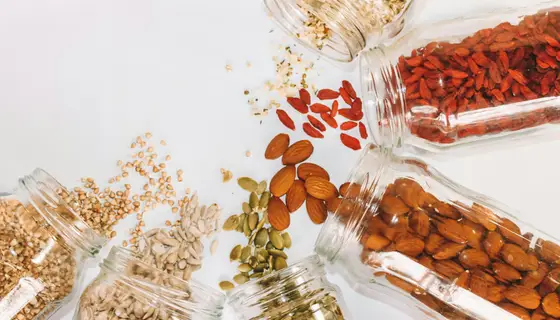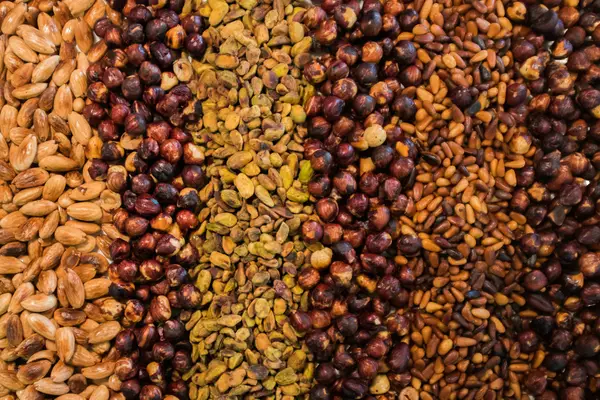
Flax and pumpkin seeds in the first half of your cycle, sesame and sunflower in the second, and your hormones rebalance. It’s tidy, it’s cheap, it’s food rather than medication, and it’s recommended everywhere in the natural health space.
It also has almost no human trial evidence behind it. Both things are true, and the useful article is the one that says so and then explains what’s actually worth doing.
The proposed mechanism
The reasoning goes like this. Flaxseeds are among the richest dietary sources of lignans, plant compounds with weak oestrogenic and anti-oestrogenic activity depending on context. Pumpkin seeds are high in zinc, which is involved in progesterone production. Sesame seeds also contain lignans, and sunflower seeds provide vitamin E and selenium.
Match the follicular phase, when oestrogen should rise, with flax and pumpkin. Match the luteal phase, when progesterone should dominate, with sesame and sunflower. Switch at ovulation.
It’s a plausible-sounding story, and each individual claim about the nutrient content is true. The problem is the gap between “flaxseed contains lignans” and “eating flaxseed on specific cycle days measurably changes your hormone levels in a beneficial direction.”
What the evidence actually shows
There is no substantial body of randomised controlled trial evidence testing seed cycling as a protocol. Not weak evidence. Essentially none. The idea circulates through naturopathic practice and social media rather than through the literature.
Some adjacent research exists. Flaxseed has been studied for effects on cycle length and hormone metabolism, with small studies suggesting possible influence on oestrogen metabolism and ovulation, though sample sizes are small and findings inconsistent. Lignans do have measurable biological activity. Zinc deficiency does affect reproductive function.
None of that tests the protocol. Whether the doses achievable through a tablespoon or two of seeds are enough to shift hormone levels, whether phase-specific timing matters at all, and whether any of it produces a clinical benefit are all unanswered questions rather than settled ones.
The honest summary: mechanistically plausible, nutritionally worthwhile, unproven as a hormonal intervention.
Why it seems to work
Plenty of women report real improvements after starting seed cycling, and those reports deserve an explanation rather than a dismissal.
Several things are usually happening at once. Adding a couple of tablespoons of seeds daily improves the diet regardless of timing, adding fibre, magnesium, zinc and healthy fats that many people were short of. Someone who starts seed cycling has usually started paying attention to their cycle generally, and often changed other things at the same time.
Premenstrual symptoms also vary a great deal month to month on their own, so a bad cycle is frequently followed by a better one whatever you do. And most protocols recommend giving it three to four months, which is long enough for regression to the mean to do considerable work.
Placebo effects on subjective symptoms like mood, energy and pain are substantial and well documented. That doesn’t mean nothing happened. It means the seeds may not be why.
Should you do it anyway
Yes, if you’d like to, and here’s the reasoning.
The risk is close to zero, apart from allergy. The cost is small. And the seeds themselves are genuinely good food. Ground flaxseed is one of the better sources of omega-3 ALA and fibre available. Pumpkin seeds are a solid source of zinc and magnesium. Sesame provides calcium. These are worth eating whether or not the timing does anything.
What matters is the frame. Treat it as a pleasant way to eat more of some nutritious foods and to build a habit of paying attention to your cycle, and it’s a good idea. Treat it as a treatment for a hormonal disorder and you may delay finding out what’s actually wrong.
Practically: grind flaxseed, because whole seeds pass through largely undigested and the lignans stay locked up. Grind fresh or keep ground seed in the fridge, since the fats oxidise. A tablespoon or two of each daily is the usual recommendation. And if you have irregular cycles, you may not know when to switch, which is its own answer.
When to stop and get investigated instead
This is the part that matters most.
Cycles consistently shorter than 21 days or longer than 35, absent periods for three months or more, periods heavy enough to soak through protection hourly, severe pain that stops you functioning, or a year of trying to conceive without success are all reasons to see a doctor rather than reach for seeds.
PCOS, endometriosis, thyroid dysfunction, hyperprolactinaemia and fibroids are all reasonably common, all diagnosable, and none of them responds to seed cycling. The genuine harm in this space isn’t the seeds. It’s the months spent on an unproven protocol while something treatable goes unexamined.
The more useful version
If your interest is in eating in a way that supports your cycle, our phase-by-phase nutrition guide covers the areas with better support: iron around and after menstruation, adequate energy intake in the luteal phase when metabolic rate rises, magnesium and calcium for premenstrual symptoms, where calcium at 1,200 mg daily has actual randomised trial evidence behind it.
And the thing that beats any protocol: knowing your own cycle well enough to tell whether anything you try is working. Three months of logged symptoms answers that question. Three months of impressions doesn’t.
Test it properly on yourself
NaturaPlan logs symptoms against your cycle day so you can see whether a change actually changed anything. Free, no account, everything on your device.
This article is for educational purposes and does not constitute medical advice. See a GP about irregular cycles, severe symptoms or difficulty conceiving.