
Free tool
Luteal phase calculator
Enter the day you ovulated, from your temperature chart, and the first day of your next period. We’ll show how long your luteal phase was.

Your luteal phase
One cycle isn’t a pattern. Chart several cycles before drawing conclusions, and talk to your GP if you’re concerned.
Runs entirely in your browser. Nothing you enter is sent or stored anywhere.
How it works
Enter your ovulation date
From a chart or a positive test.
Add your next period
The day it started.
See your luteal phase
And whether it sits in the usual range.
Find your ovulation day automatically
NaturaPlan marks your ovulation from your temperature shift and shows your luteal phase length every cycle, so you never have to count days yourself.
Try it free for 14 days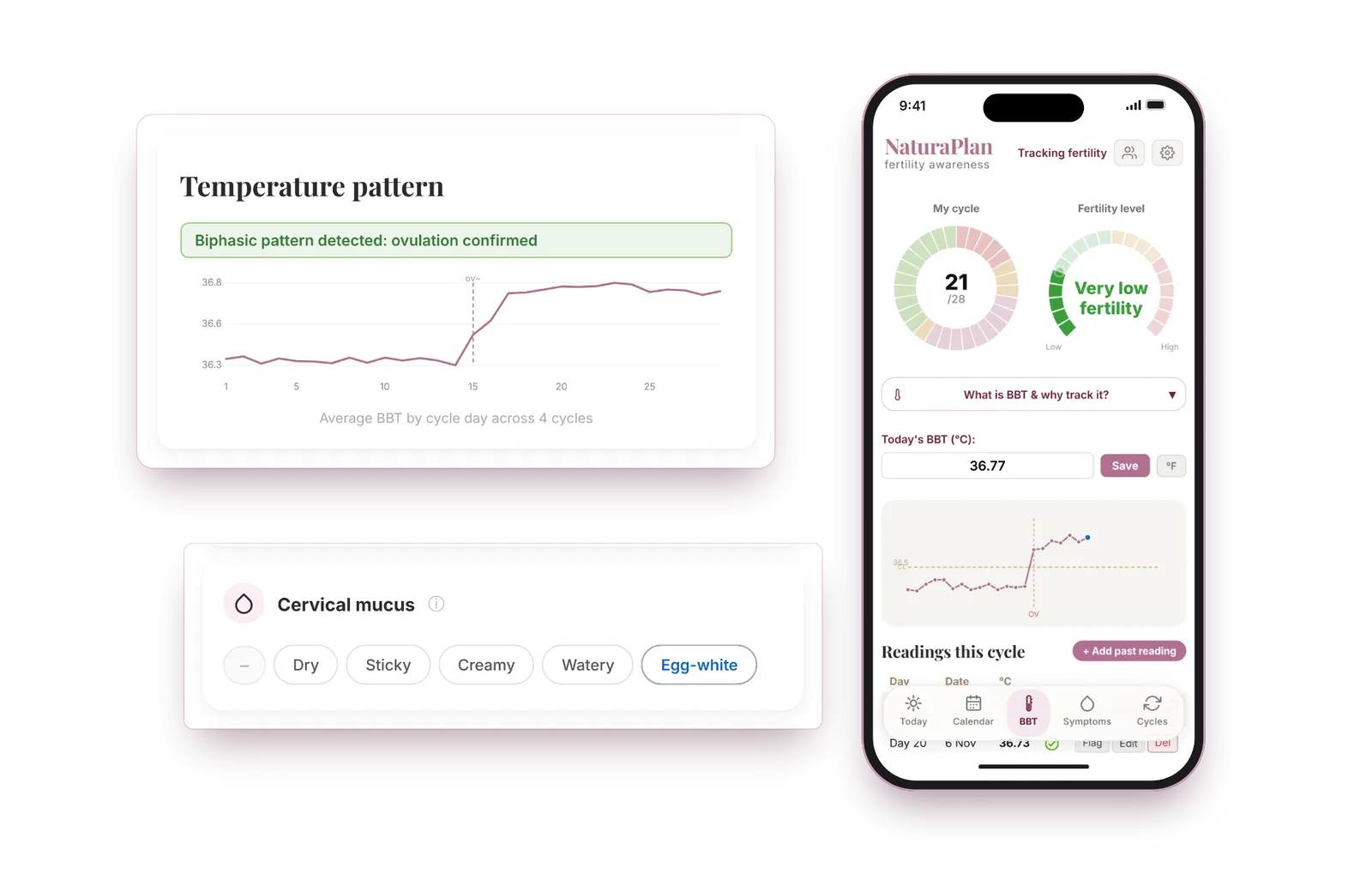
Confirm ovulation
Log temperature and mucus, and see ovulation confirmed on your chart.
Try it free for 14 daysCommon questions
What is the luteal phase?
The time between ovulation and the first day of your next period. After ovulation the ruptured follicle makes progesterone, which prepares the uterine lining.
How long should it be?
Most luteal phases are between 10 and 16 days, and the length is fairly consistent for each person from cycle to cycle. Many studies put the average around 12 to 14 days.
How do I know the day I ovulated?
The most practical way is a basal body temperature chart. A sustained rise in temperature after ovulation marks the day, which is the first day of your luteal phase. Ovulation test strips show the surge about a day before.
What if mine is under 10 days?
A short luteal phase on a single cycle isn’t a diagnosis, because charting errors are common. If it is short across several well-charted cycles, and especially if you are trying to conceive, discuss it with your GP.
Why does it matter for fertility?
A very short luteal phase may not give a fertilised egg enough time to implant. Knowing your own length also makes your ovulation estimates more accurate.