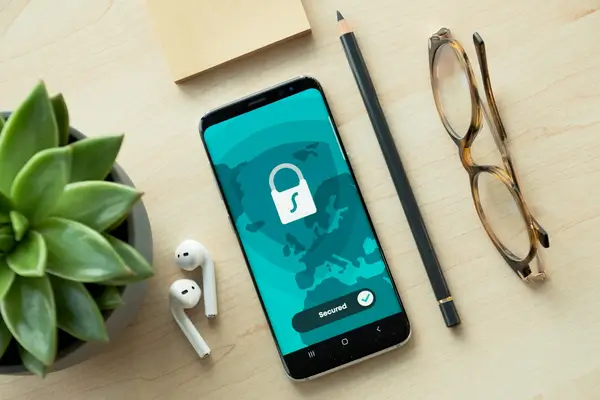
She downloaded a cycle app. She’s been logging her period, her symptoms, and every time you’ve had sex. There’s now a dated, timestamped record of your sex life sitting on a server in another country, and you were never asked about any of it.
Most men have never thought about this for a second. It’s worth ten minutes.
What actually gets logged
The standard feature set across mainstream trackers covers period dates and flow, mood, symptoms, medications, weight, sleep, and a tick box for intercourse, usually with a separate one for whether protection was used. Some ask about libido. Some ask whether you’re trying to conceive, which is a statement about your family plans as much as her health.
Put together, that’s a document describing when you have sex, how often, whether you use protection, when you were trying for a baby, and when something went wrong. Very few records about your marriage are that detailed, and you haven’t read this one.
Where it goes
Anything that requires you to make an account is storing your data on someone else’s servers, because that’s what the account is for. The account exists so the data can live somewhere other than your phone.
Once it’s there, what happens next is governed by a privacy policy, and a privacy policy is a description of current intentions rather than a guarantee. It can be rewritten. The company can be acquired and the new owner can take a different view. It can be subpoenaed. It can be breached.
This is not hypothetical. In 2021 one of the largest period tracking apps in the world settled with the US Federal Trade Commission over allegations it had shared users’ health data with third party analytics and advertising firms, despite telling users it wouldn’t. That’s the whole problem in one case. The policy said one thing and the data flowed anyway, and nobody would have known if a regulator hadn’t looked.
The pattern to watch for isn’t a company being evil. It’s a company being acquired, changing direction, running short of money, or integrating an analytics library that someone in engineering added without much thought.
Why this lands differently for you
Two things, and men usually miss both.
You didn’t consent. She agreed to the terms. Half the data describes you. Your sexual frequency, your family planning intentions, and in a lot of apps a rough map of your evenings for the last three years. You’ve never seen the policy you’re covered by.
And this data doesn’t go stale in a useful way. Payment records get boring after a few years. A record of who was trying for a baby and when, or who was avoiding pregnancy and how, holds its sensitivity for decades. It touches employment, insurance, custody, immigration and legal proceedings, depending on where you live and what changes there. Health data is the category people most reliably underestimate at the point of handing it over, because the risk arrives years after the decision.
Advertising is the quieter problem
The obvious worry is a leak. The everyday reality is targeting.
Cycle data is commercially valuable because it predicts spending. A woman in the early stages of trying to conceive is one of the most valuable advertising audiences that exists, and an app that knows her cycle phase knows things about her mood and her purchasing patterns that no other data source can supply. That’s why so many of these apps are free.
If a product costs nothing and has no obvious revenue model beyond a small paid tier, the data is doing the earning.
How to audit the one on her phone
Four questions, and you can answer all of them in about five minutes.
Does it require an account to work. If yes, the data is on a server. Not a scandal, just a fact you should be clear about.
Does it still function in aeroplane mode. Turn the phone offline and open it. If the app can’t show her cycle without a connection, the cycle isn’t stored on the phone.
Does the privacy policy mention advertising partners, analytics providers or third party service providers. Search the page for those terms rather than reading it end to end. That’s where the transfers get authorised.
Can she export everything and delete the account. If deletion is buried or unavailable, that tells you what the data is worth to them.
Structural beats promised
The distinction worth holding onto is between a company promising not to misuse your data and a design where there’s nothing to misuse.
A promise depends on the company staying the same company, keeping the same policy, and not being compelled by anyone. A design where the data never leaves the device doesn’t depend on any of that. Nobody can hand over what they never held.
That’s how NaturaPlan is built. No account, no sign-up, and her cycle data lives in local storage on her own device rather than in a profile tied to her name. There’s no analytics or advertising code in the app. The only thing that ever leaves is what she chooses to send when she generates a partner link so you can see her status, and that’s an anonymous code with an optional PIN rather than an identity.
Read that as the honest version rather than an absolute claim. If she shares with you, something moves. Everything else stays where it is.
The version of this conversation that works
Don’t tell her to delete her app. It’ll land as you telling her what to do with her own health information, and she’s had it for years.
Ask the four questions together instead, and let the answers do the work. Most people have genuinely never checked, and the aeroplane mode test in particular tends to land, because it takes fifteen seconds and the result is unambiguous.
And if you’re the one who cares about this, be useful about it. Find the alternative, check that it does what she needs, and make sure it can import or at least that she isn’t losing her history for nothing. Being the household’s privacy sceptic is only worth something if you also do the legwork.
Family planning without the data trade.
NaturaPlan runs on your device with no account and no tracking code, and Partner View shares only what she chooses to share. Open NaturaPlan free → or read the For Partners page.
This article is for education, not legal or medical advice.
Sources
US Federal Trade Commission, 2021 settlement regarding a period and fertility tracking application’s data sharing practices. Office of the Australian Information Commissioner, guidance on health information under the Privacy Act.