There are two different kinds of cycle bloating, they have different causes, and they arrive at different times. Most advice treats them as one thing, which is why most advice only half works.
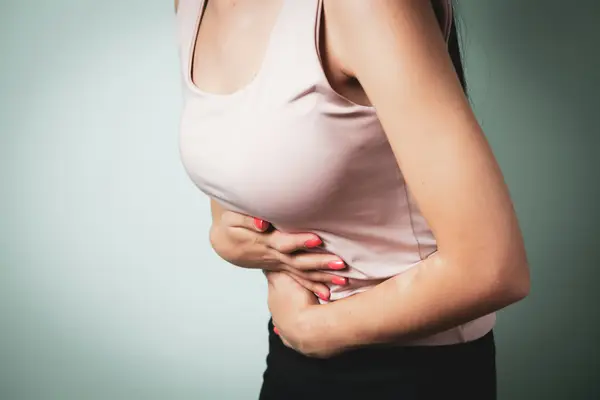
The first is luteal bloating, the gradual, uncomfortable fullness that builds over the week or so before bleeding starts. The second is menstrual bloating, which turns up in the first day or two of your period and often comes with looser stools and cramping. Telling them apart changes what you do about it.
The luteal kind: progesterone slowing everything down
After ovulation, the collapsed follicle becomes the corpus luteum and starts producing progesterone. Progesterone is a smooth muscle relaxant, and your gut wall is smooth muscle. Transit time slows. Food sits longer, fermentation increases, gas builds, and the abdomen distends.
That’s the mechanical half. The other half is fluid. Oestrogen and progesterone both influence the renin-angiotensin-aldosterone system, which governs how much sodium and water your kidneys hold onto. Across the luteal phase your body retains more of both. A swing of half a kilo to two kilos in the week before your period is ordinary, and almost none of it is fat.
Progesterone peaks roughly seven days after ovulation, which is usually when the bloating is worst. If you’re charting, that’s a useful thing to see on the page. The discomfort isn’t random and it isn’t getting worse each month, it’s tracking a hormone with a predictable curve.
The menstrual kind: prostaglandins speeding everything up
When progesterone drops and the lining begins to shed, the uterus releases prostaglandins to drive the contractions that expel it. Prostaglandins don’t stay politely inside the uterus. They act on nearby smooth muscle too, including the bowel.
The result is the opposite problem. Transit speeds up, stools loosen, and the cramping you feel is partly uterine and partly intestinal. Plenty of women who spend the week before their period constipated and distended spend day one of bleeding running to the toilet. Both are the same hormonal story at different points.
What actually helps, and how confident we can be
Calcium has the strongest evidence of anything in this space. A randomised controlled trial of 1,200 mg daily found meaningful reductions across PMS symptoms including bloating and fluid retention, with the effect building over two to three cycles rather than appearing immediately. If you’re going to try one thing, this is the one with real trial data behind it.
Magnesium has moderate support, mostly for cramping and mood, with some trials showing an effect on fluid retention when taken through the luteal phase. The evidence is thinner than for calcium but the safety profile is good.
Reducing sodium in the second half of the cycle is mechanistically sensible and low-cost, though it hasn’t been isolated in a decent trial. Same for drinking more water, which feels counterintuitive when you’re already retaining fluid but does help, because mild dehydration prompts the body to hold onto more.
Movement works through a plainer mechanism. Walking stimulates gut motility directly, which is exactly what progesterone is suppressing. Twenty minutes after dinner does more than most supplements.
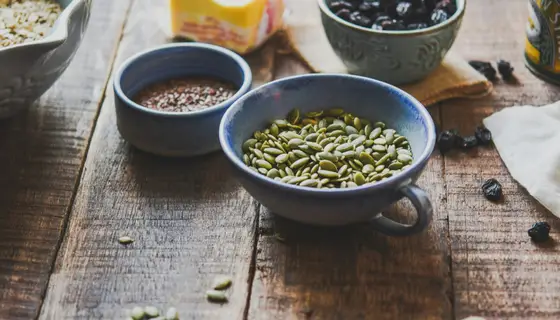
Dandelion leaf, fennel and peppermint are traditionally used for bloating and fluid retention in herbal medicine. Peppermint oil has some trial support for IBS-type symptoms specifically. The others rest on tradition rather than trial data, and it’s worth being clear about which is which. Our guide to eating by cycle phase covers the broader nutritional picture.
Evening primrose oil comes up constantly in this context. The trials that have tested it properly have been mostly negative. It isn’t harmful, but it isn’t doing what the packaging suggests either.
What separates normal from worth checking
The pattern matters more than the severity. Cycle bloating builds in the luteal phase and resolves within a few days of bleeding starting. That’s the shape of it.
Bloating that doesn’t resolve, that persists for more than a couple of weeks a month, or that has no relationship to where you are in your cycle is a different question and deserves a GP appointment rather than a supplement. The same is true if it comes with feeling full very quickly when you eat, persistent pelvic or abdominal pain, unexplained weight change, or a change in bowel habit that sticks. Persistent bloating is one of the more commonly missed early signs of ovarian cancer, largely because it’s so easy to attribute to hormones. If it isn’t cycling, don’t assume it’s cyclical.
Severe bloating that arrives with severe period pain, pain during sex, or pain when opening your bowels during your period is worth raising as a possible endometriosis question, particularly if it’s been going on for years and been dismissed before. Your cycle carries more health information than most people realise.
Why tracking it answers the question
The single most useful thing you can do with bloating is find out whether it cycles. That sounds obvious until you try to answer it from memory, which almost nobody can do accurately.
NaturaPlan logs bloating as a physical symptom alongside your temperature and mucus observations, so after two or three cycles you can see whether it clusters in the luteal phase, spikes at menstruation, or sits there constantly regardless of where you are. Those three patterns point in completely different directions, and the third one is the one you want to catch early.
It’s also the exact information a GP asks for and almost nobody arrives with. Turning up with three cycles of logged data rather than “I think it’s been worse lately” changes the conversation.
Track it and find out whether it’s cyclical
NaturaPlan is free, needs no account, and stores everything on your device rather than on a server. Log bloating alongside your temperature and cycle phase and see the pattern in a couple of months.
This article is for educational purposes and does not constitute medical advice. Speak to a qualified healthcare provider about symptoms that concern you.