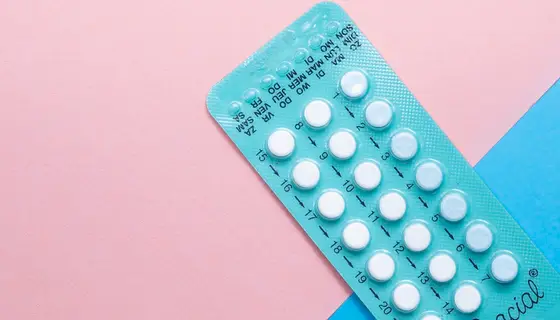
Women who stop taking hormonal contraception are frequently told: “Your fertility will return immediately.” This is true in the sense that pregnancy becomes possible almost immediately, but it is misleading in the sense that the natural cycle typically takes three to six months to fully re-establish itself after long-term pill use.
Understanding what to expect makes the transition less confusing, and knowing how to track your cycle during this period makes it manageable.
What Happens When You Stop
When the pill is discontinued, synthetic hormones clear from the body within a few days. The hypothalamic-pituitary-ovarian axis, which the pill has been suppressing, gradually resumes function. This is not an instantaneous switch; it is a gradual recalibration.
The first bleed: Most women experience a withdrawal bleed within two to four weeks of stopping the pill. This is not a true period, it is the last hormone-withdrawal bleed, similar to the bleeds that occurred during the pill-free weeks. The first true ovulatory bleed, the one preceded by an actual follicular phase and ovulation, typically follows two to eight weeks later.
The first few cycles: Even after bleeding resumes, the first two to four post-pill cycles are often irregular or anovulatory (without ovulation) as the body re-establishes full hormonal function. This is normal and expected, not a sign of fertility problems.
The postpartum transition follows a similar broad pattern, early cycles are often anovulatory while the body recalibrates, though the timeline and hormonal drivers are different. If that’s your situation, see our guide on whether you can get pregnant before your first period after birth.
What You May Notice
Cycle changes: Length, flow, and symptom intensity may all change coming off the pill. Women who started the pill before their natural cycle was fully established (adolescence) may encounter a natural cycle they have never properly experienced.
Mood changes: Two patterns are common:
- An improvement in mood, return of emotional range, lifted flatness, feeling more like yourself
- An initial period of hormonal variability as natural cycle fluctuations (which the pill suppressed) return
Both are real and documented. Progesterone withdrawal in particular can produce temporary emotional sensitivity as the cycle re-establishes. This typically resolves within two to three cycles. Our overview of what the pill does to your body covers the mood evidence in full.
Skin changes: The pill suppresses androgens, which reduces acne for many women. Post-pill, androgen activity returns. Some women experience a period of increased skin reactivity, particularly in the first one to three months, before sebum production settles.
SHBG and libido: Sex hormone binding globulin (SHBG) levels elevated by the pill may remain high for months after stopping. Libido changes may persist into the post-pill period. Most women report normalisation within three to six months.
Tracking Your Post-Pill Cycle
The post-pill transition is an excellent time to begin fertility awareness tracking, not because you need to be tracking for contraception immediately, but because it gives you real-time information about how your cycle is re-establishing itself.
What to expect on the charts:
- The first cycle or two may show no clear temperature shift, anovulatory cycles are common early in the post-pill transition
- Mucus patterns may be irregular or difficult to categorise initially
- Cycle length will likely vary more than it eventually will once hormonal rhythm is established
Use backup contraception during the post-pill transition if you are avoiding pregnancy and your signs are unclear or anovulatory cycles are present. Do not rely on the calendar, track your actual signs.
What NaturaPlan shows: Even without a clear ovulatory pattern in the first cycle, logging your temperatures and mucus in NaturaPlan builds a baseline. By the third or fourth post-pill cycle, most women find that a clear pattern has emerged and their charts are readable.
Trying to Conceive After the Pill
Most women are told they can try immediately after stopping, which is true in the biological sense. In the practical sense, waiting one to two complete natural cycles before trying to conceive allows the uterine lining to re-establish its natural structure and gives you one to two cycles of sign data to work from for conception timing.
Once you’re ready, our guides to timing intercourse for conception and conceiving with irregular cycles cover the specifics.
Sources
- NHS. (2023). Combined contraceptive pill, stopping. https://www.nhs.uk/conditions/contraception/combined-contraceptive-pill/
- Healthline. (2023). What to expect when you stop taking birth control. https://www.healthline.com/health/birth-control/stopping-birth-control
- Medical News Today. (2023). Coming off the pill. https://www.medicalnewstoday.com/articles/322648
Two ways to take the next step:
📱 Try NaturaPlan Free — chart your post-pill cycle as it returns
📖 Get the free guide — The Natural Cycle, including the complete post-pill transition chapter